My newsletter is named after a traditional Jewish blessing upon encountering the majesty of a large body of water: “Blessed are you, our eternal G-d, Ruler of the Universe, who made the great sea.” BTS is a free, monthly publication which shares Jewish and non-Jewish approaches to mindful, contemplative living. Some come from from spiritual teachings from the past and the present; others from my Zen practice and Jewish faith. Included here are also some of my own news as well. BTS is a conversation, and I enjoy hearing from and responding to the readers.
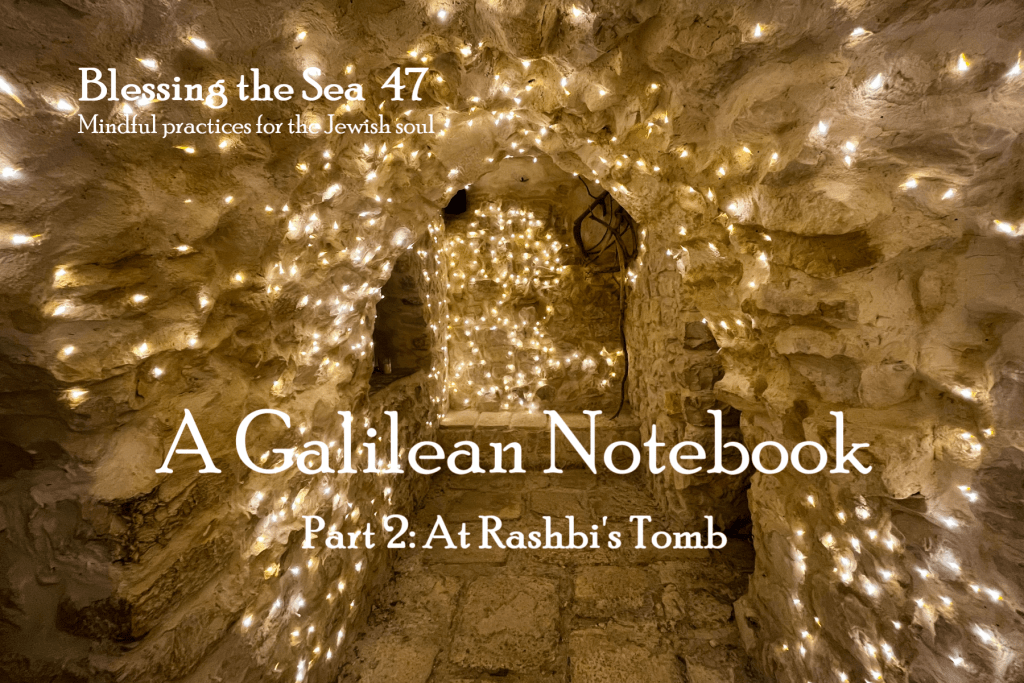
“I am able to exempt the entire world from the attribute of judgment.”
— Talmudic sage and mystic Rabbi Shimon bar Yochai (Rashbi), 2nd century, CE
What if someone could intercede on your behalf before G-d?
Strictly speaking, as all human beings are created in His image, we need no intermediaries to connect with the divine simply because the divine is already within us – if we only choose to engage with it.
But what if it’s not enough, that we feel like we’re engaging, but not getting through?
What if we could enlist the help of someone favored by G-d, someone who achieved an incredible insight into the hidden workings of the world?
In the Kabbalah, such a person, a tzaddik, is the embodiment of the 9th sefirah (divine emanation), which governs the harmony between and within worlds. Wouldn’t their power and merit help us plead our cause more effectively?
Veneration of the tzaddikim, once common mostly among the Jews of North Africa and the Hasidim of Eastern Europe, has grown exponentially in Israel over the last 50 years. The most visited site is the grave of Rashbi in Meron in the hills of Galilee. Hundreds of thousands of pilgrims come to Meron every year. To them, his burial site is a living vortex of holiness, and visiting it an opportunity to experience it directly.
It is also a place to study, to receive a special blessing, to have a festive meal, or all of the above.
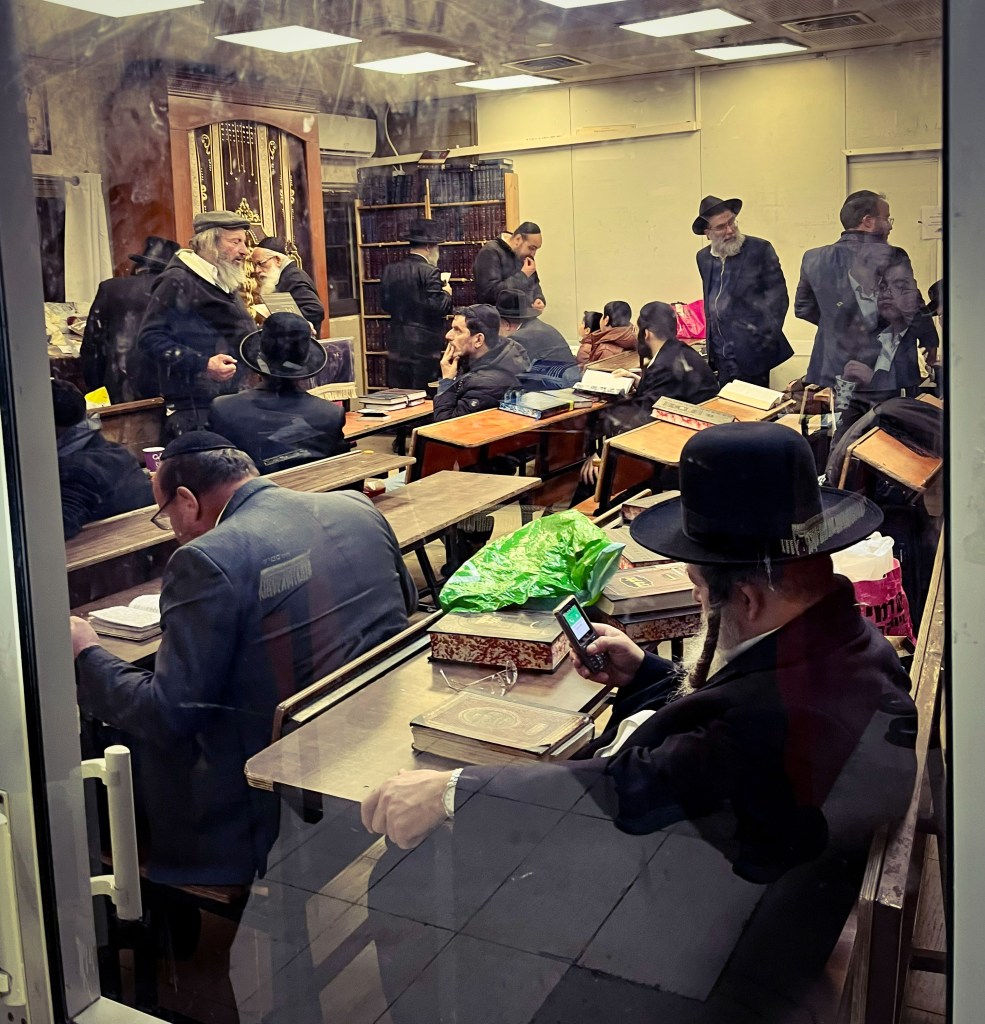
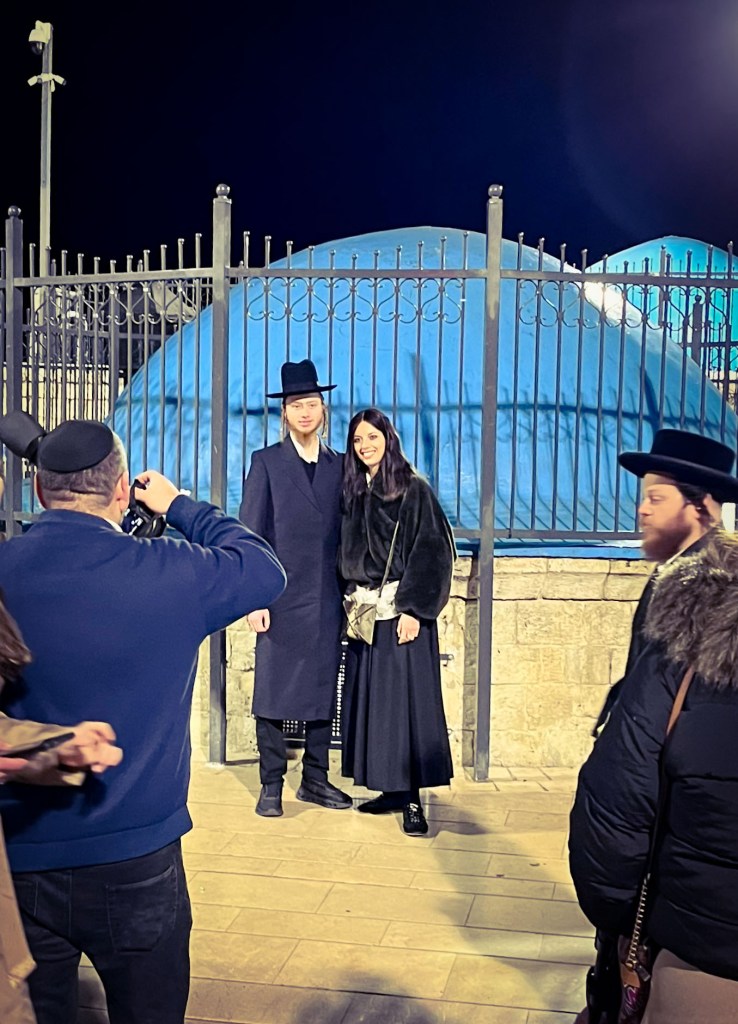
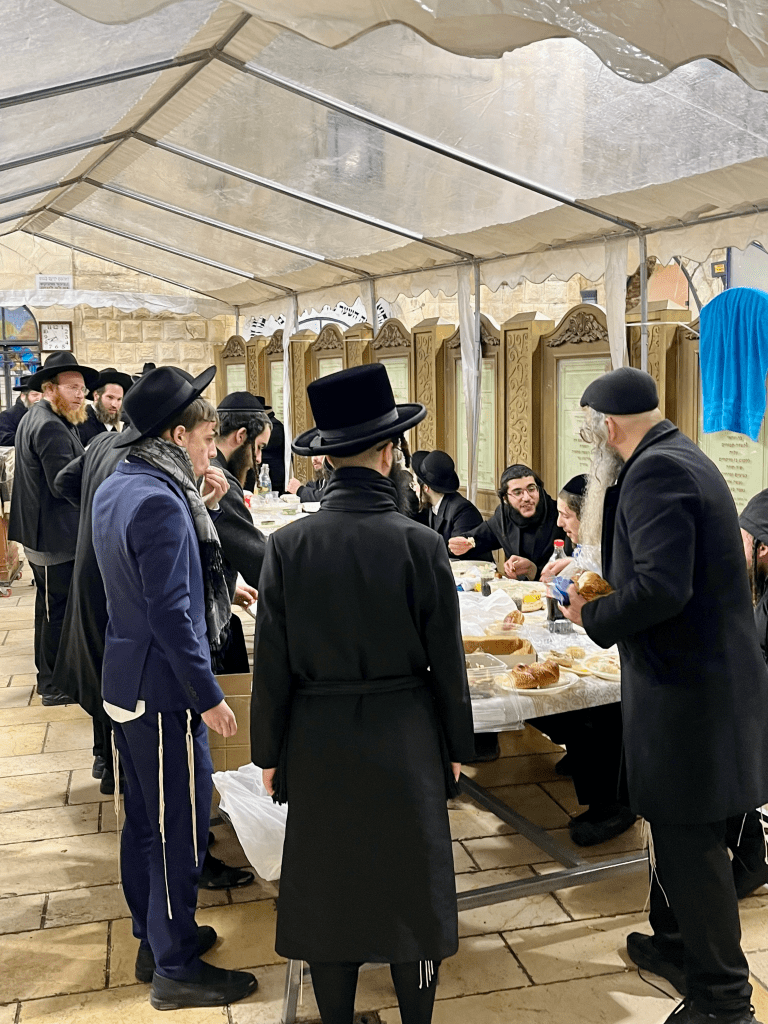
I had a night off in Tzfat after a long day of volunteering (see Part I of this notebook). I was hungry but realized that given our tight schedule, this was my only chance to make it to Rashbi’s tomb on Mount Meron nearby. I could see the lights of Meron blinking at a distance across the dark, windy valley.
A public bus to Meron from Tzfat which only took about a half-hour.
The grounds of the shrine are vast so as to accommodate the multitudes who pitch up tents all over the hill and participate in celebrations at Lag b’Omer.
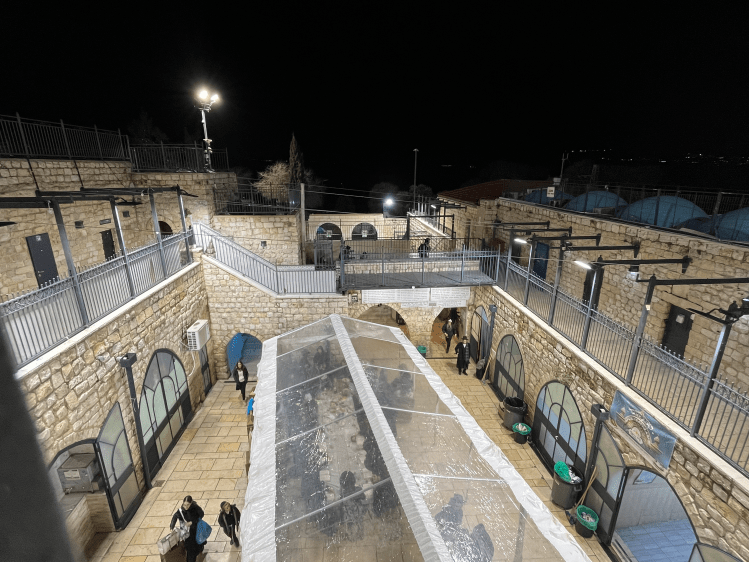
But even on an uneventful, cold Thursday night in January, you could feel the festive excitement as men and women of all ages were streaming up the streets that led to the tomb.
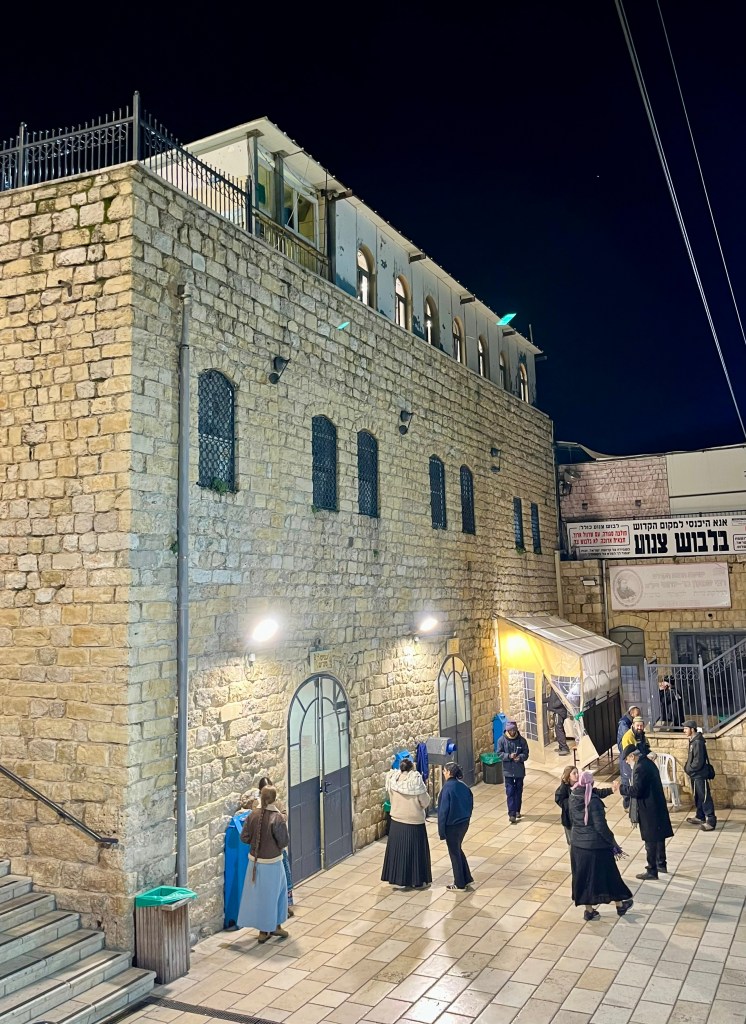
Tradition holds that Rashbi and his son Elazar are buried in a cave underneath the two-story mausoleum. The tomb was first documented in the travel diary of Rabbi Yaakov ben Netanel ha-Cohen in the early 12th century.
Another traveler noted in 1472: “Jews make three pilgrimages to the graves of their notable men, especially the tomb of [Rashbi], and recite penitential prayers and supplications to G-d to grant them rain. They stay there for several days, and the rain comes at once.”
The tomb and the surrounding land were bought from the original Arab owners in the 1840s by R. Shmuel Abu, the chief Sephardi rabbi of Tzfat, who built the Ottoman-era structure, substantially expanded since.
Once reaching the shrine, I picked up a bilingual Tehilim (Book of Psalms) and headed inside.
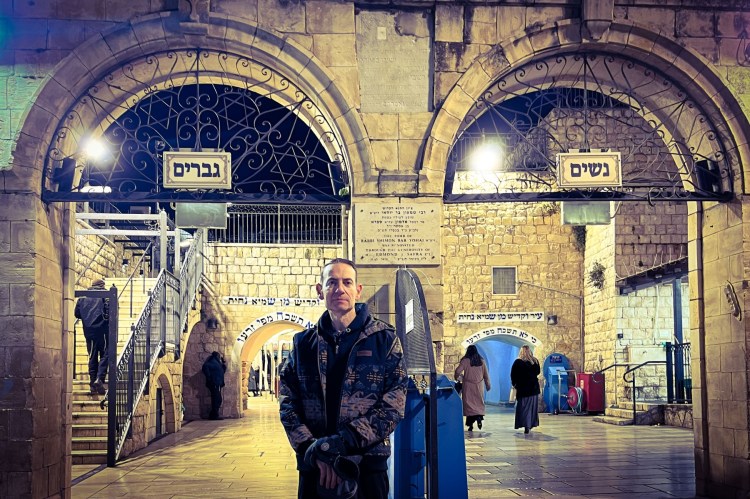
I was able to find a spot directly at the wall of the tomb. With my hand on it, I recited quietly the Tikkun ha-Klali, a set of 10 Psalms, known as the Complete Remedy, my prayer joining a continual buzz of men praying all around me, the air itself vibrating with it.
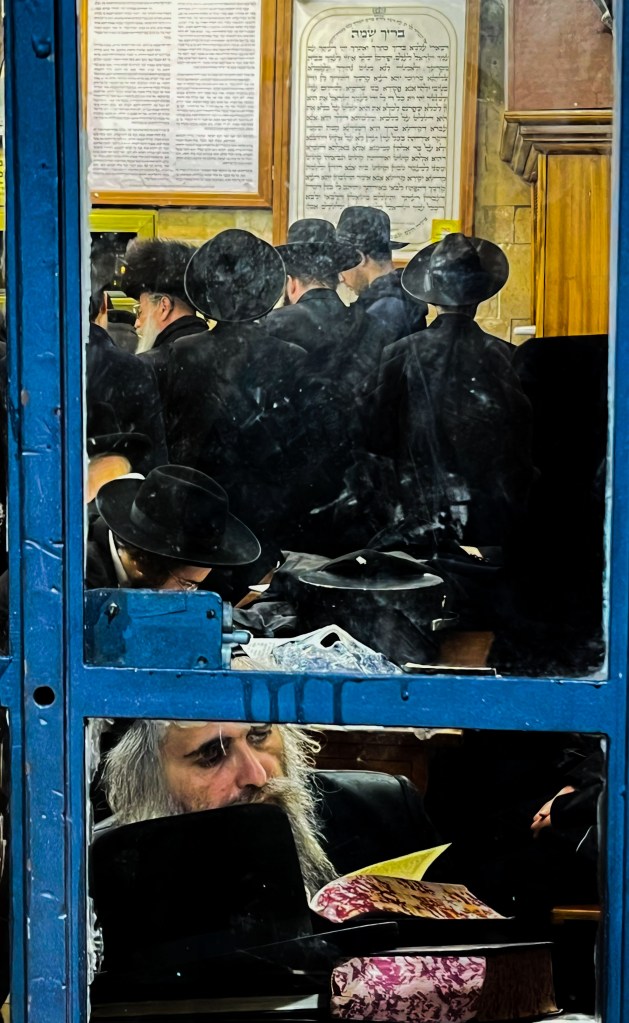
Psalm 90 especially moved me:
“In the morn, they are like grass that passes.
In the morning, it sprouts and passes,
by evening it withers and dies. . .
We consume our years like a sigh.”
Praying in such intense, close proximity is transcendent. You’re right there in the vortex. Time stops. Nothing else matters. You can ask Rashbi for anything. Your prayer might sweeten a harsh judgment, maybe nullify it.
A middle-age man dressed in plain clothes, neither fancy nor shabby, was crying reciting the psalms next to me, his forehead leaning on his arm folded against the wall. For whom, I couldn’t help wondering? Someone sick, dying, passed away? For himself?
Stories of Rashbi abound in the Talmud (Rashbi and the Romans, Rashbi in the cave, Rashbi and the dove, and so on). Here is a lesser-known story that speaks to me.
“A former student of Rashbi who had left the Land of Israel came back wealthy. The other students envied his success and wanted to leave the country as well.
Noticing his students’ discontent, Rashbi took them to a valley near Meron. There he prayed: “Valley, valley, may you be filled with gold dinars!” and the valley began flowing with golden coins.
Rashbi then asked his students: “Do you desire gold? Here it is before you, take it! But know that the more you take now, the more you will reduce your portion in the World to Come. For that’s where you will receive the reward for your Torah study.”
(Shemot Rabbah 52)
How mindful I am of my time? Am I living up to my spiritual potential, or chasing income and security? Or, to put it bluntly, do I want to earn more, or learn more?
Ultimately, there is just so much time and energy one can expend, and the older I get, the more acutely I feel this inevitable limit. Thank you, Rabbi Shimon Bar Yochai, for challenging me to think about it.
When I stepped outside, a late minyan was forming to pray maariv, the evening service. Those gathering wore regular clothes and knitted kippot. They asked me to join it, which I gladly did, but we were still 2 people short of 10.
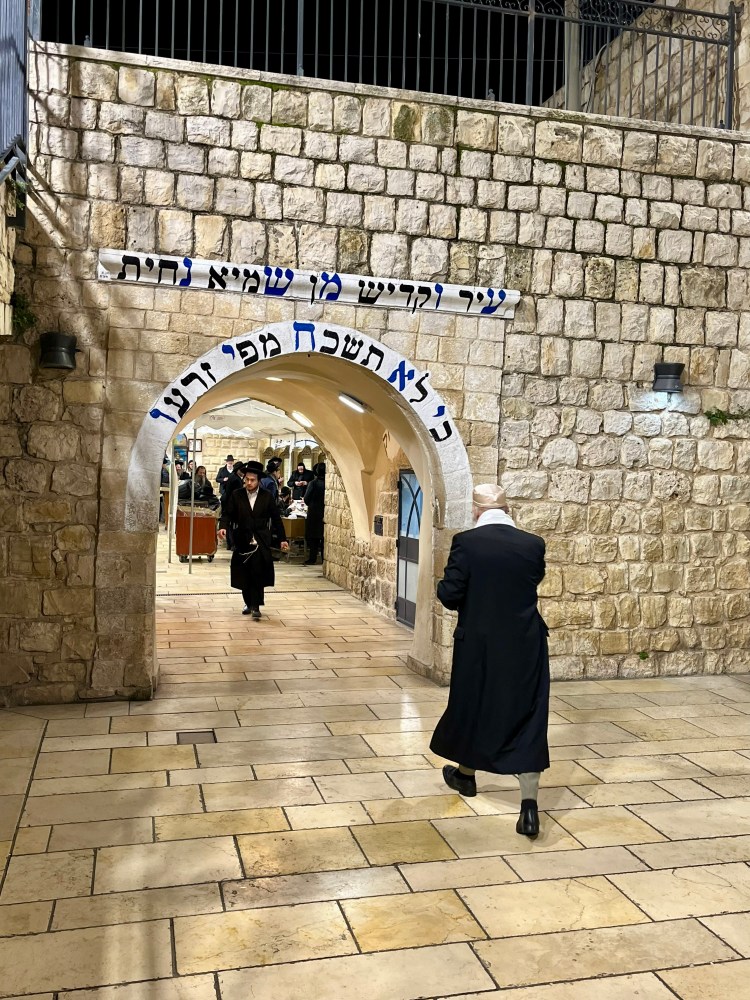
Haredim were passing by in droves. The minyan leader tried to get them to join, “C’mon, gever, just 10 minutes,” but they wouldn’t. This went on for a while, which made me sad to witness such lack of unity at a holy site. Finally, a trio of teenage Chabadniks agreed, and we could start.
We prayed facing south, over the dark hills and pine forests, towards Jerusalem, while 10 feet behind us, men were praying in the opposite direction, towards Rashbi’s Tomb.
“To count our days rightly,” came to me another line from Psalm 90, “instruct us that we may get a heart of wisdom.”
That is exactly what I asked of Rashbi.
–Lane
All photos are © Lane Igoudin, 2026
Related BTS issues:
#46 A Galilean Notebook, Part 1
#42 A Rocky Mountains Notebook
 Lane Igoudin | Author, Professor, Dad