My newsletter is named after a traditional Jewish blessing upon encountering the majesty of a large body of water: “Blessed are you, our eternal G-d, Ruler of the Universe, who made the great sea.” BTS is a free, bi/monthly publication which shares Jewish and non-Jewish approaches to mindful, contemplative living. Some come from from spiritual teachings from the past and the present; others from my ongoing training and practice of Zen and Judaism. I also include here some of my own writing and news as well. BTS is a conversation, and I enjoy hearing from and responding to the readers.
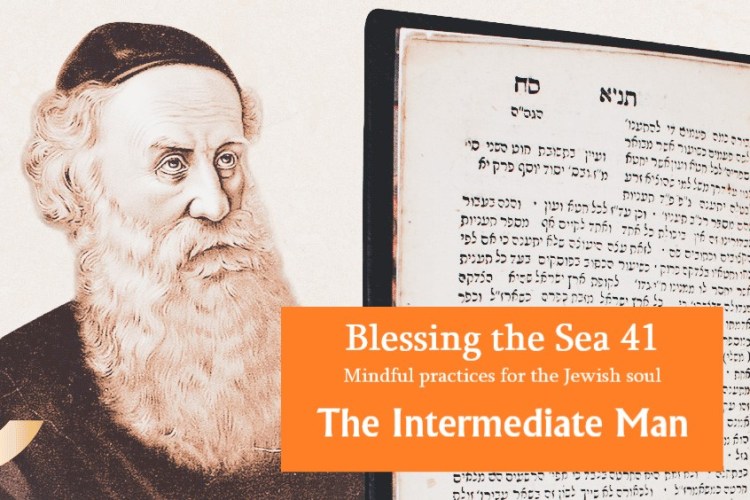
“Brain rules over the heart by virtue of its innately created nature. With the will-power of the brain, anyone can prevent his heart’s desires from expressing themselves in action, word, or thought, and divert his attention toward the completely opposite direction, particularly in the direction of holiness.“
— Rav Shneur Zalman, Tanya, Ch. 12 (1796)
In July, my op-ed on the recent US Supreme Court decision allowing parents to withdraw their kids from public school curriculum which includes LGBTQ-themed books was published in LA Blade, America’s longest-running gay newspaper.
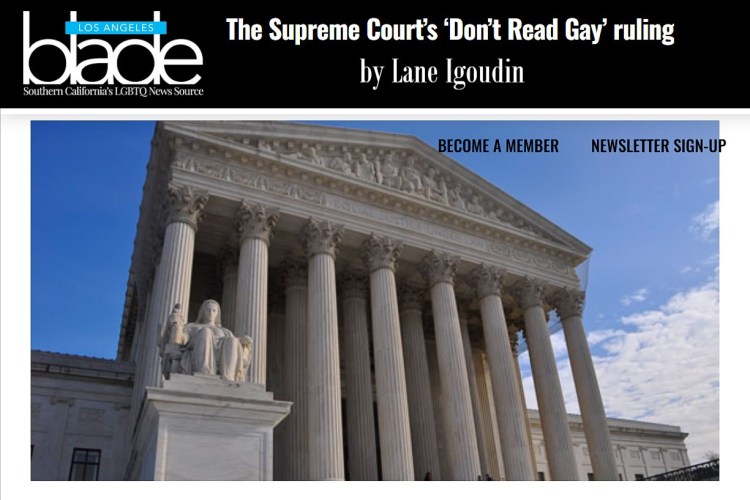
Stating my disagreement with this decision as a gay Dad, educator, writer, but also a person of faith was important. What followed was an interesting experience in itself.
I shared a link to the op-ed on the members’ forum of Authors Guild, a professional organization I belong to. There, it caused a firestorm – 35 replies before the thread got moved to a more specific list, where it drew another 12 comments so far. Some writers sided with me, but quite a few came out in support of the ‘don’t read gay to children’ ruling.
First, the heated debate made me realize that we tend to think of the literati being by default liberal, but many authors are at a different end of the spectrum. Catherine Coulter is not an oddity at all.
Secondly, I was able to pause before jumping to conclusions.
It is far too easy to dismiss those who support the effective banning of LGBTQ-themed books from public schools as simply being prejudiced and homophobic. Reading without judgment their negative replies, I saw their underlying concern – about the ability of parents to direct their children’s learning, to present the world and its values to them as they, the parents, see fit. This concern over who can make decisions about how we raise our children is something I, at the other end of the spectrum, can relate to as well.
Discussing a shared concern could bring us into a discussion, open a possibility that we may work out something that would appease us both, or, better, will create a new solution that will work across the spectrum.
Since my book came out, I’ve spoken to live audiences at more than a dozen public events, given 33 media interviews. Some of them were on markedly conservative radio shows and podcasts.
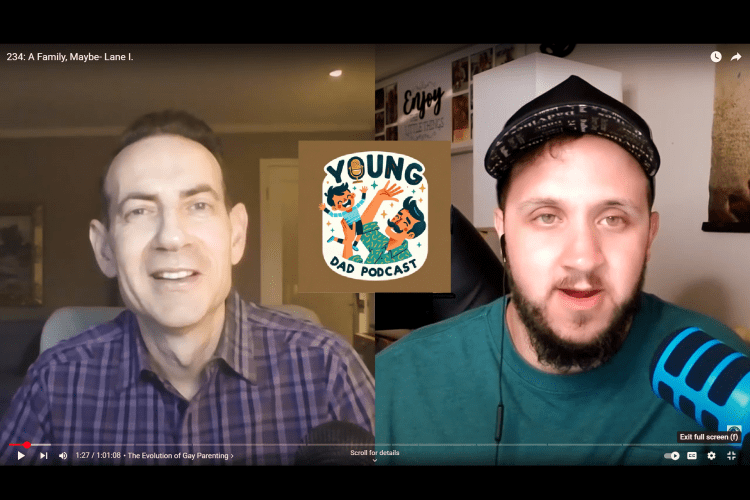
But I did notice that respect and listening, even when not agreeing, were the premises on which a conversation could be built.
Those interviews were among some of my most interesting and satisfying so far. And also some that were most fun.
On one such interview, the host asked me, “You and your husband are gay. Did you raise your children gay too?”
“We had to accept,” I replied in a comically sad tone, “that our kids are who they are, so we’ll have to love them just as they are. And our daughters happen to be… heterosexual. They both have steady boyfriends. I think they inherited their good taste in men from us, their Dads.”
The interviewer laughed and invited me to come back and do another episode.
Believe me – this was not my first reaction to his question. I was about to bristle at the accusation! To wring my wrists that someone would even think such a ludicrous thing in 2025! To throw in his face the rhetoric and the statistics that prove how wrong he was!
But I felt an opening before I jumped into judging him. I understood that the host’s question came not from malice but from lack of knowledge. This was an opening for him to learn. So why not meet him there, and maybe have a few laughs too?

In July, I took several online classes from Pardes Institute of Jewish Studies (where I was supposed to study in person this summer). One of them was on Tanya, an ethical and philosophical treatise written by Rabbi Shneur Zalman (1745-1812), the founder of Chabad.
Published in 1796, Tanya was Rav Zalman’s response to his followers’ question: “I believe in G-d, I know what’s right and wrong, but my feelings take control of me and I make wrong decisions. What should I do?”
In Tanya, Rav Zalman presents the vision of three types of human behaviors: the tzaddik, a naturally-born righteous person, a rarity in any generation; the rasha, i.e., the misguided one, driven to an unethical way of living by their animal nature, which is who we are by default; and the beinoni, the intermediate or ‘in-between’ person, one who can achieve a balance between their sacred and animal natures.
The secret lies in the space between the feeling and the resulting action. That space is controlled by human free will.

“Anyone and at any time can become an ‘intermediate’ (beinoni) man. A beinoni does not revile evil — for that is a feeling entrusted to the heart. Instead, he should turn away from evil and do good in actual practice — in deed, speech, or thought, as the choice, ability, and freedom are given to every man that he may act, speak, and even think what is contrary to his heart’s desire.” (Tanya, Ch. 14)
Feelings, according to Rav Zalman, arise naturally and can’t be controlled, but thoughts can, actions can. When a passion or emotion takes over, a believer would think of G-d, and love and fear of G-d will generate the energy to overcome the negative. We can’t rid ourselves of despair, jealousy, greed, or laziness. Bearing witness to feelings stops them from becoming actions by “thrusting away the negativity” and focusing on G-dly power. That’s our moment of free will and of victory.
Back to the Authors Guild listserv controversy. I was glad that my op-ed started a polemic that others could contribute to, even if I don’t agree with them. And I am certainly thankful for the pause that allowed me to listen and learn, and instead of walking away, open a venue for a conversation.
This was a ‘beinoni’ moment. Maybe just one, but it stayed with me.
Warm regards,
–Lane
 Lane Igoudin | Author, Professor, Dad