My newsletter is named after a traditional Jewish blessing upon encountering the majesty of a large body of water: “Blessed are you, our eternal G-d, Ruler of the Universe, who made the great sea.” BTS is a free, bi/monthly publication which shares Jewish and non-Jewish approaches to mindful, contemplative living. Some come from from spiritual teachings from the past and the present; others from my ongoing training and practice of Zen and Judaism. I also include here some of my own writing and news as well. BTS is a conversation, and I enjoy hearing from and responding to the readers.
“When you run on the earth and with the earth, you can run forever.”
— A Tarahumara proverb
What makes a trip memorable? People. When you travel as part of a group, experiencing new things together, processing them at dinner or at a hotel bar, it adds another layer of meaning to the journey.
Travel also opens up deep vistas not only into the landscapes of new lands, but also into the lives of those you meet along the way like:
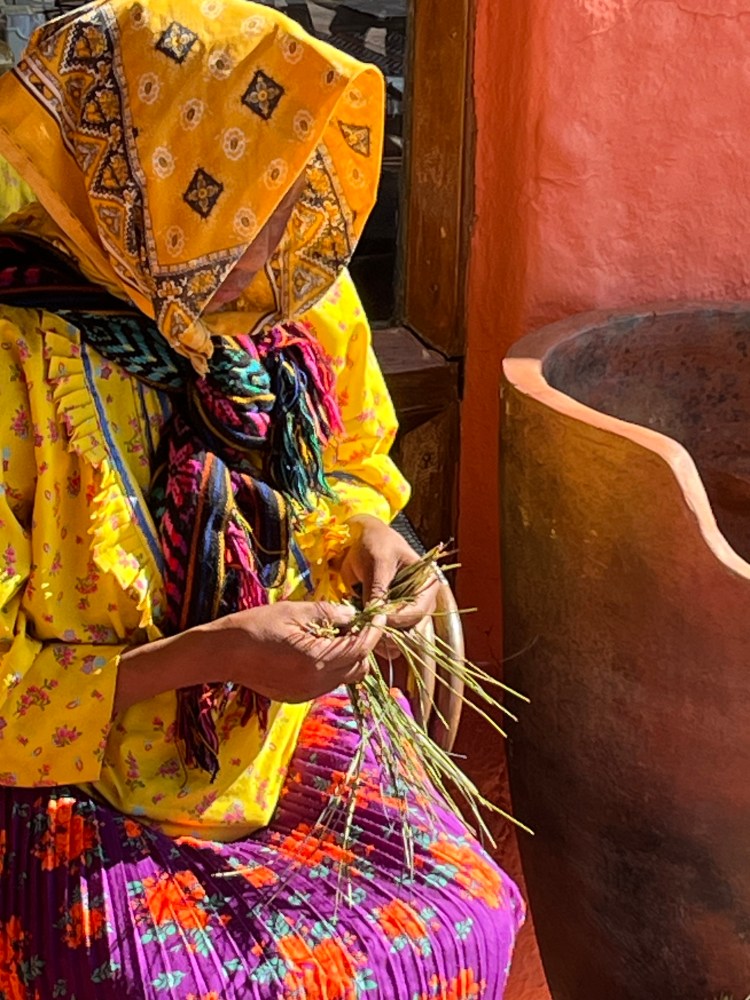
a fellow traveler, a widowed school principal who just lost her sister due to a power outage which immobilized her oxygen tank; our Mexican tour guide struggling with the same issues parenting her adult child as we do in LA; a family of basket weavers who trek on foot from the valley floor to sell their handicrafts to tourists at the canyon rim, and so on.
Those stories enrich travel memories, detailing them with new caves, faultlines, and bridges.
To the Canyon
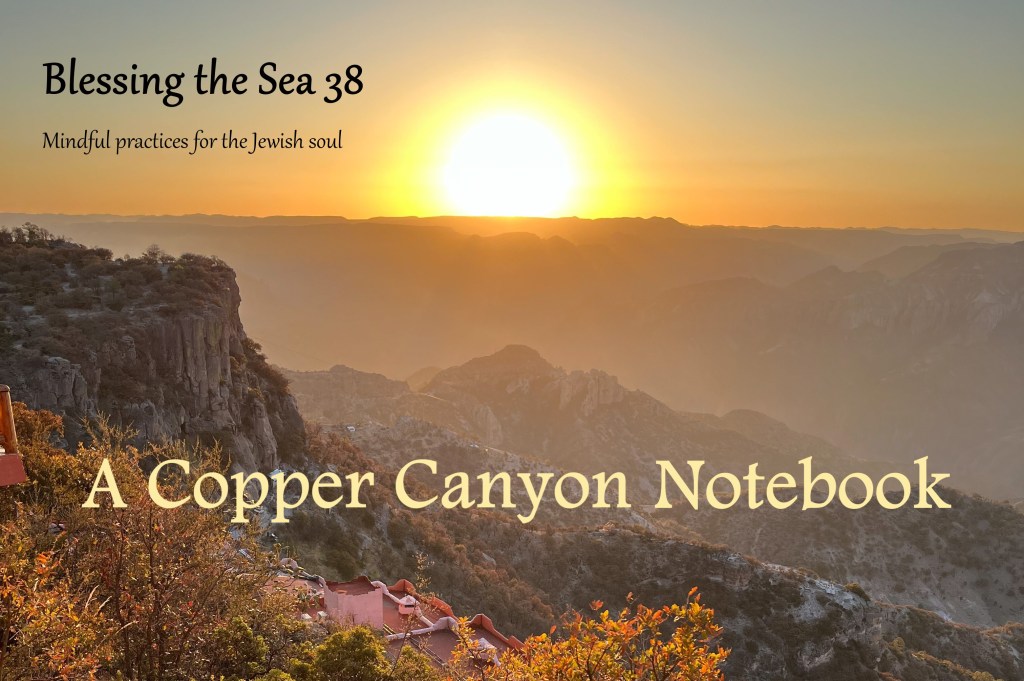
Mexico’s majestic Copper Canyon (Las Barrancas del Cobre), comprising, in fact, seven canyons, is three times larger than the Grand Canyon and something to behold. Sunsets and sunrises, like the one pictured above, are particularly unforgettable.

To get there, our tour boarded El Chepe (the Chihuahua Pacific Railroad) for a six-hour ride from El Fuerte, Sinaloa, near the Sea of Cortez, a former colonial capital of the region.
Ascending from the low-lying El Fuerte to the canyon rim at about 7,500 feet, we watched the vegetation gradually evolve from mesquites and ocotillos of the Sonoran Desert to pines, manzanitas, and junipers of the highland sierras, with organ pipe cactus dotting the hills almost the entire way up. Deep gorges, rivers, and waterfalls came up on both sides.

The Tarahumara
The Copper Canyon is the ancestral home to about 100,000 Tarahumara Indians. They call themselves “Rarámuri,” which means “foot runners” or “those who run fast,” as running is a central part of their culture and upbringing.
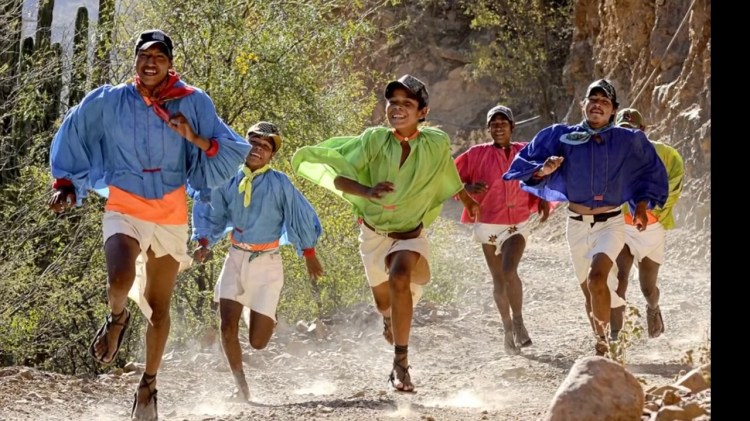
Both boys and girls are trained from an early age to run long distance over a very rugged terrain. It is not uncommon for a Tarahumara to travel 50-80 miles a day at a running speed.
With villages scattered throughout the canyon valleys, often accessible only on foot, the region’s remoteness has preserved traditional lifestyle. The Tarahumara still speak their language, a relative of the language spoken by Cahuilla Indians near Idyllwild, California, where I am writing this newsletter. They wear traditional, homemade clothes and make the handcrafts, to which we, the tourists, are so susceptible.

Women sellers, some nursing babies, would run up to our train at a brief stop to sell their handmade baskets for a few dollars. We gladly bought a few, impressed by their colors and designs, though my joy of buying was dampened by the understanding of how much their livelihood depends on this trade.
Seeing our dollars travel down, while the baskets were being lifted up, was symbolic of the north-south relationship in wealth and power.
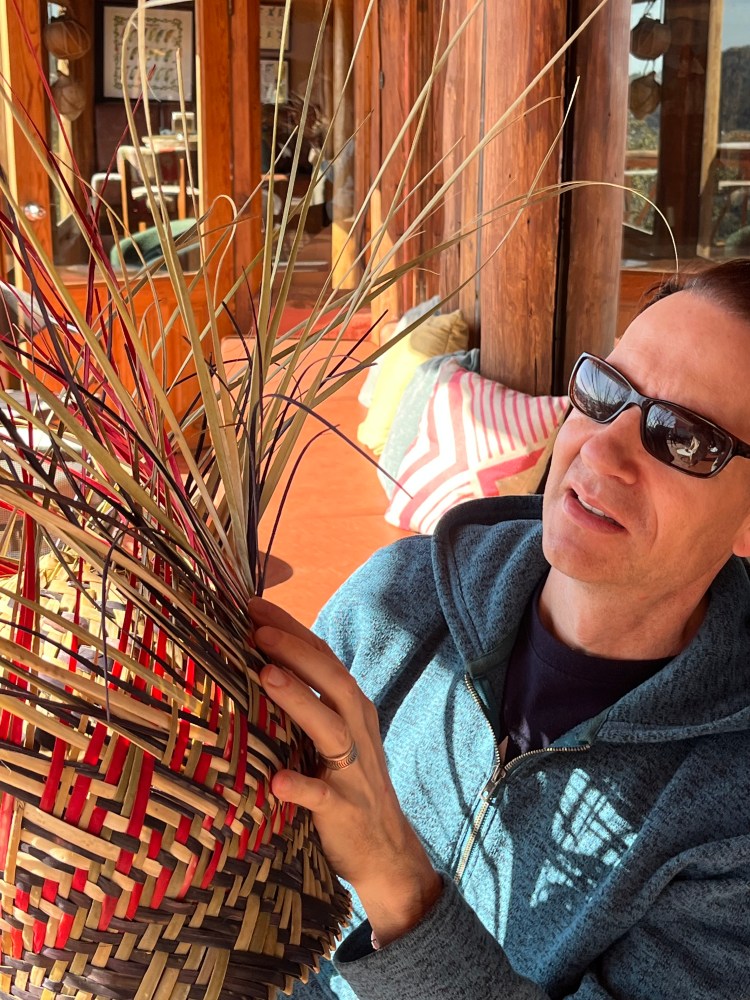
Later at the hotel, two Tarahumara women, Berta and Ella, gave us a demonstration of how they weave their baskets from dyed pine needles and strips of yucca leaves. Ella then showed us a traditional dance, her feet following the fugure 8 – a symbol of eternity, her ankle rattles made of dried seed pods setting the rhythm.
The Tarahumara believe that a person’s soul (iwigála) gives them the ability to talk and sing. Curiously though, “the soul has characteristics opposite to those in everyday life. If a person is cold, it means the soul is hot; and if they are asleep, the soul is awake and out working” (Milwaukee Public Museum, the Tarahumara Collection).
It is as if your soul motivates you to keep going, to strive for balance.
Cooperation as a basic social value
Another takeaway from this trip was learning that the Tarahumara economy and society are based not on money, but on bartering and, in particular, on cooperation.
To them, it is simply unacceptable to refuse to help your neighbor, even with daily tasks.
“No Tarahumara will think twice to loan goods or services to another individual in the community. The concept of cooperative labor is so fundamental in the Tarahumara culture that a refusal of help can result in an excommunication from the community” (MPM).
Mutual assistance, explains anthropologist William Merrill who studied the Tarahumara, also ensures equality and cohesion within the tribe.
Our culture possesses a similar spirit. “Kol Yisrael arevim zeh bazeh” – ‘all Jews are responsible for one another’ – is a core Jewish value (Talmud, Shevuot 39a). At every turn of my life when I needed help, I found it in Jewish communal institutions. As a young refugee arriving in the U.S., for instance, I benefitted from HIAS, JVS, and Hebrew Free Loan Association.
Cooperation seemed to be the theme of our trip. On our way back to the U.S., our tour bus got stopped due to an accident: a massive truck overturned and blocked both lanes of the freeway ahead of us. The long line of cars and buses stood still in the noonday sun in the midst of the Chihuahuan Desert.
Some cars started to cross the 100-foot divide to the freeway’s other two lanes going in the opposite direction. Once there, they took up the closest lane and went up against the traffic – a common practice, apparently. A large truck ahead of us tried to do the same and got stuck in the sand, its wheels spinning wildly.
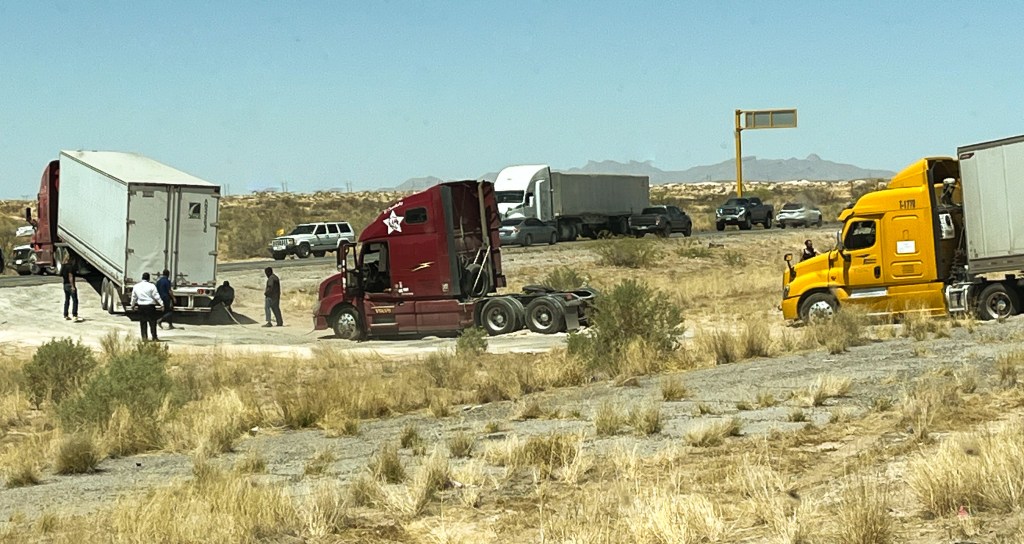
Almost immediately, motorists in other trucks and buses rushed out to help the driver pull out his vehicle. It wasn’t easy, and another truck got stuck in the sand as well.
Eventually, our bus managed to reach the other side of the freeway, and going past the scene of the accident, we saw other motorists helping to get the injured driver out of the cabin of his overturned truck. No one was waiting for police or ambulance.
Is cooperation rooted in Mexican culture? Is it because as a mestizo culture, it incorporates indigenous traditions, such as those of the Tarahumara?
I am not an anthropologist, but as a bystander, I was inspired by this spirit of cooperation. It is probably the most enduring memory of the trip.
Asagá isábaga. (Sit down and rest.)
-Lane

All photos, except the one of the Tarahumara runners, are © Lane Igoudin, 2025.
Related BTS issues:
#47 A Galilean Notebook, Part 2
#46 A Galilean Notebook, Part 1
#42 A Rocky Mountains Notebook
 Lane Igoudin | Author, Professor, Dad