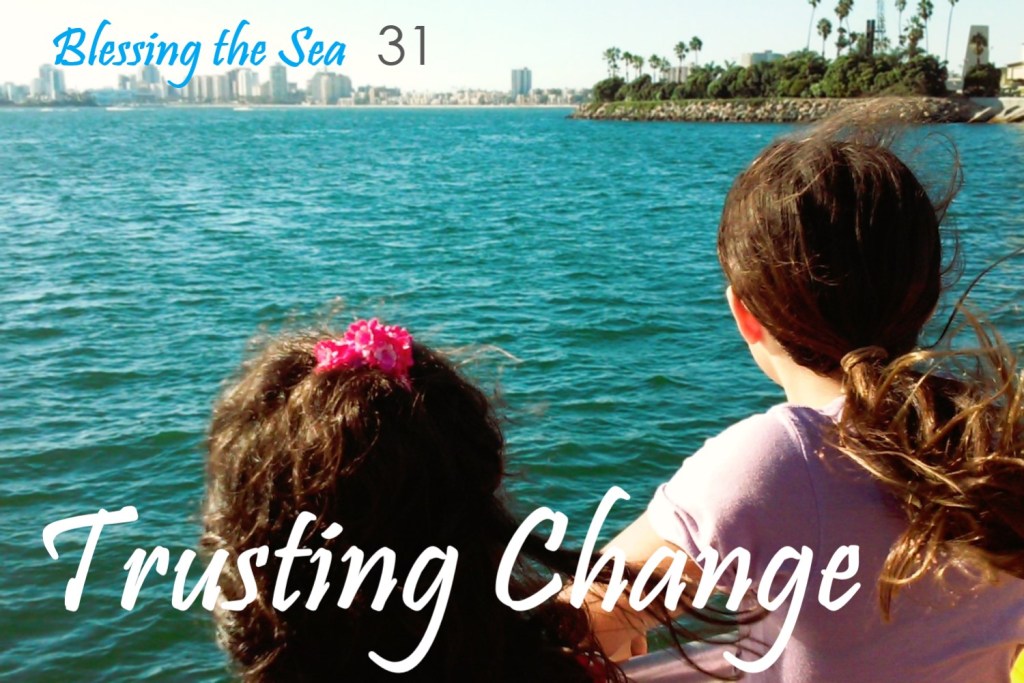
We are often sad and suffer a lot when things change, but change and impermanence have a positive side. Thanks to impermanence, everything is possible. Life itself is possible. If a grain of corn is not impermanent, it can never be transformed into a stalk of corn. . . . If your daughter is not impermanent, she cannot grow up to become a woman. Then your grandchildren would never manifest. . . When we can see the miracle of impermanence, our sadness and suffering will pass.
—Thich Nhat Hanh, No Fear, No Death, 2002
“You give talks on glueing your family together, and now it’s naturally disintegrating,” commented a friend on my difficult adjustment to being an empty-nester. She is right. The more I speak about our family story, the further it seems removed from our daily reality: our kids have moved out to start their independent lives, and it’s just my husband and I left at home. (See my previous newsletter.)
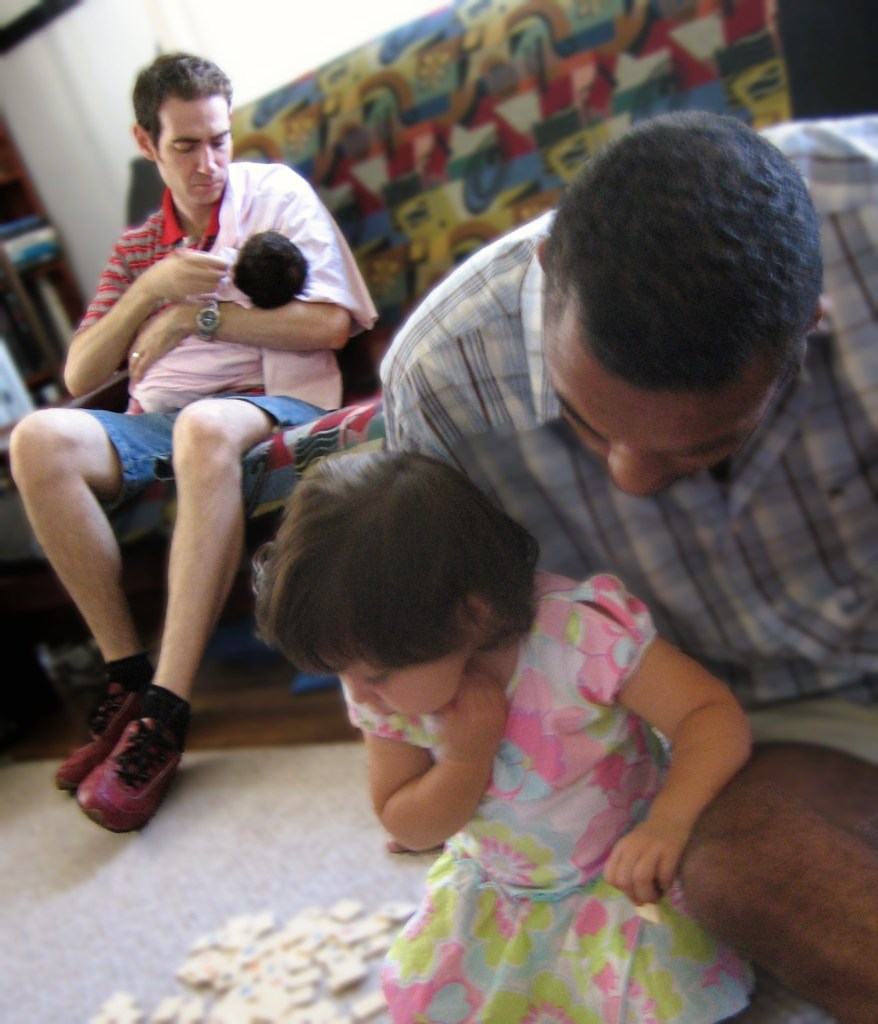
So much of my identity in the last 20 years revolved about being a parent, i.e., a 24/7 caretaker, who would drive kids to school, shop groceries, cook dinners, ensure homework gets done, plan and execute playdates, sports practices, doctor’s appointments, read bedtime stories, and try to be their trusted confidante while also a wiser adult.
With most of it suddenly gone from my life, I find myself adrift about who I am without these routines, I miss the ‘good old days’, and I wish things had stayed the same.
From a mindful perspective, some things are real, and they exist, while others exist only in the mind. In discussing my emptynesting blues, My Zen teacher challenged me to keep the memories of those routines, of our lives back then, as just that, memories, but not allow them to define who I am now.
He asked me point-blank, “What is your reality of being a Dad — today?”
“Well…,” I had to think about it for a while. “I am still their father. I still support them and worry about them constantly, even if from a distance. My care is definitely less hands-on, but my love not a bit less. And yes, I do feel sad that things have changed. All that is true.”
Thinking about his question helped me to start getting used to this new chapter in our lives. And so did several other insights I am sharing below.
Koshin Paley Ellison, founder of the NY Zen Center, much like Thich Nhat Hanh quoted above, advises to develop what he calls confidence in impermanence.
“We might not know if things are going to get better, but they’re definitely going to change. Knowing this can shift people, even if it’s just slightly, out of the darkest of places.”
As for my sadness, which is real and present, in the Jewish tradition, we can frame it transformatively with. . . gratitude. It might sound like a contradiction, but it really isn’t. We thank G-d for every situation He has decided to put us in: good or bad, uplifting or depressing.
There is a traditional Jewish blessing on hearing bad news, the one you might have recited visiting a house of mourning, or seen shortened to ‘BDE’ in Facebook condolences: “Blessed (‘barukh’) be He, Creator of the Universe, the Judge of truth (‘dayan ha-emet’).”

Saying it, we acknowledge that only G-d is the true judge of every situation. In other words, most life changes are beyond us. There should be a point to them, even if we don’t know it, and we have to trust that.
A particular teaching by Rav Kook about this blessing also made me think about our kids’ leaving home in a different way. As he writes in Ein Eyah, II-328:
“A self-centered individual will look at all circumstances only in the context of his own narrow interests. From this viewpoint, good and bad are measured purely by selfish criteria.”
One of the reasons for my sadness is that I’ve been clutching to the idea that my kids would always live with me, and that I would always direct and control their lives to their benefit, and be able to protect them from the dangers of this world. This would be, in Rav Kook’s terms, selfish as it would really primarily benefit me, prolonging the familiar and comfortable parent-child relationship we had when they were kids, rather than letting it evolve into a more mature bond between a parent and an adult child.
Now that they are adults, I need to let go of them for their own sake. Not let go entirely, but step back, set up the right conditions for them to spread their wings, and pray and trust G-d that they will take off safely.
Book tour and writing update
The recent riot in front of the synagogue Adas Torah, compounded by the reality of living in the post-Oct. 7 world, prompted me to write a poem.

Titled “Nothing Is Ever New,” it just came out in the Los Angeles Jewish Home, the largest Jewish family newspaper on the West Coast.
The fact that a paper serving largely an observant community has accepted my piece tells me that no matter where we fit religiously or politically, issues like the rise of anti-Semitism and a growing tolerance of violence in the U.S. concern all of us across the Jewish spectrum.

I was delighted to be interviewed recently about my memoir A Family, Maybe, by the book reviewer Deirdre Pippins on her popular podcast / YouTube channel Bookaholic.
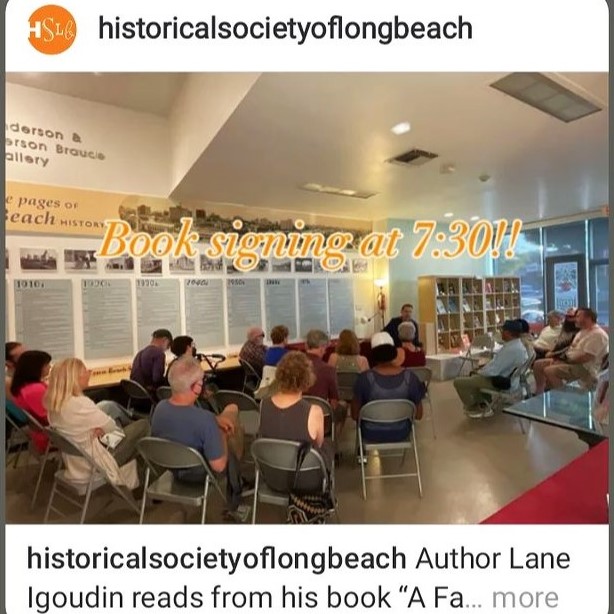
My talk about A Family, Maybe at the Historical Society of Long Beach on July 5 was special to me because of the location: in the neighborhood where our kids grew up, and much of the book takes place. Thanks to the location as well, we had a pretty large turnout with many familiar faces in the audience.
Lastly, I have added 3 more stops to my book tour: Idyllwild, Belmont Shore Book Fair (Long Beach), and Mexico City!
Join me if you can, and have a safe and restful summer.
-Lane
 Lane Igoudin | Author, Professor, Dad