
When [your] prayers are refined, the holy breath that emanates from [your] mouth will merge and connect with the Supernal Breath which enters [your] body at all times. . . This breath travels from Above to below and then returns Upwards. And [it allows you] to easily connect the part of Divinity that is within [you] to its Source.
Baal Shem Tov (1698-1760), The Pillar of Prayer
This summer, I participated in a fascinating online class offered by Applied Jewish Spirituality. Over the course of 8 weeks, Yiscah Smith, a Jerusalem-based spiritual teacher, taught us breathing-based Jewish meditation practices, drawing from Rabbi DovBer Pinson’s book Breathing and Quieting the Mind.
What makes mindful breathing specifically Jewish?

The Buddhist tradition encourages you to focus on breathing so as to let go of clinging to thoughts, desires, and delusions, and to notice and merge with the great reality, the flow of life all around you. Here are, for instance, basic breathing instructions from Zen Mountain Monastery.
The Jewish perspective is different. Focused breathing can become an act of noting the Creative force emanating from G-d, partnering with it, engaging with it fully.
“Breathing,” Yiscah taught, “becomes a conscious feedback, circulating Divine energy from the Source into you… and from you to the Source. It becomes a sacred act, it slows us down, it reminds us of the Divine presence.”
Let me share here just one of the practices we learned from her.
Entering the Word (like entering the ‘Arc’ per Baal Shem Tov)
- Select a prayer or a meaningful quote.
- Think of the first word, say it on the exhale, pause, inhale, pause, and. . .
- Move to the next word and repeat the cycle.
- Feel every sensation as each word, each letter, courses your body.
I started to use this technique when reciting the Sh’ma, am and pm: word/exhale – pause – inhale – pause. Doing so brought me into a deeper, almost physical contact with each word of the 6-word prayer. But again, it could be used with any statement meaningful to you, or one in which you’d like to get to a deeper meaning.
Recent news. I am grieving the devastation of Lahaina, the underrated gem of Hawai’i, and in many ways, its historical heart.
I’d spent time on Maui, wrote a paper about trilingualism on Kaua’i, and feel great affinity for the islands’ culture and history. I posted some memories of Lahaina on my website.

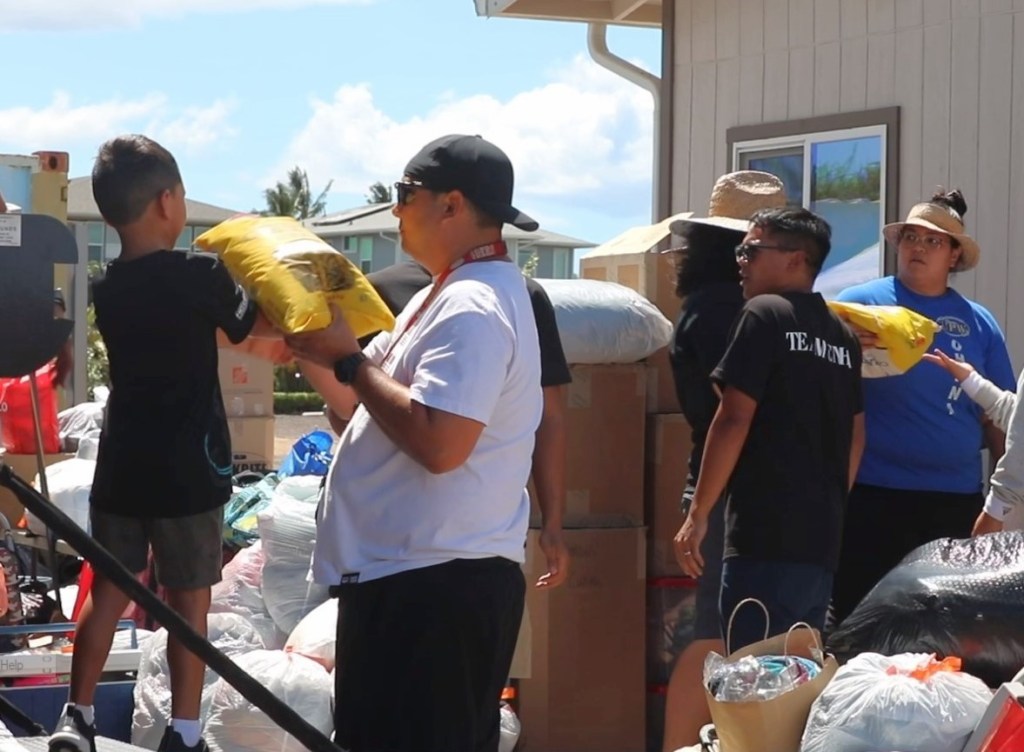
I’ve since donated to the relief fund set up by the Council for Native Hawaiian Advancement (CHNA) to “provide resources that can be deployed quickly and efficiently to support evolving needs, including shelter, food, financial assistance, and other services as identified by our partners doing critical work on Maui.” Please consider doing the same.
In my own news: in August, I enjoyed reading my essay “Out of Dark Depths” (published in Parabola Magazine, Winter 2022-23) and hearing other local writers’ work at the first-since-COVID gathering of Authors Guild / LA chapter.
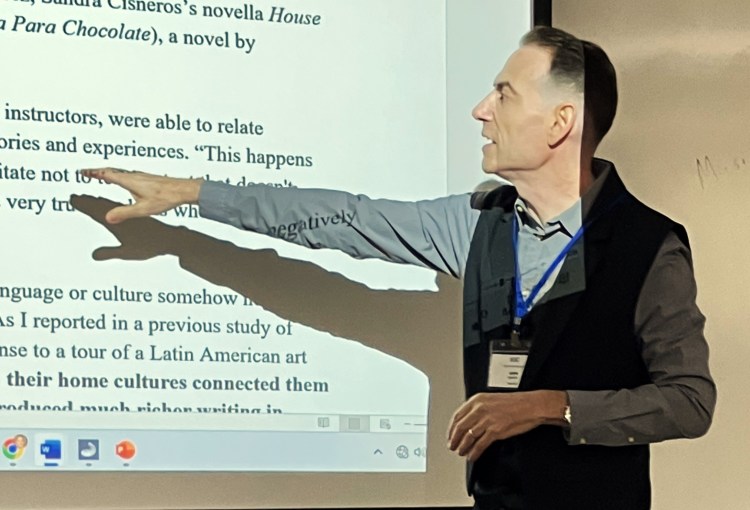
I also spoke on culturally inclusive English teaching as part of the back-to-school Convocation Day on my campus (LACC).
My presentation, “Resources, Not Deficits,” was based on the study I’d published and presented earlier this summer at the World Congress of Applied Linguistics, but here I refocused it on specific, practical ways to make our classrooms more inclusive for Latinx students.
Returning to breath. In the closing session of her course, Yiscah shared with us the words of the Maggid of Mezritch (1704 –1772): “Everything a person speaks and even thinks is imprinted on his breath, and when the life force [i.e., breath] returns Above [in the exhale], all this becomes revealed – Above.”
Then she commented, “With every breath, I can be a better me. Am I really using every breath given to me by the Creator to be a better person?“
That is one challenging question. I’ll leave you with that.
-Lane
 Lane Igoudin | Author, Professor, Dad