
“Do not think that the knowledge you presently possess is changeless, absolute truth. Avoid being bound to present views. Learn and practice non-attachment to views in order to be open to receive others’ knowledge. Truth is found in life and not merely in conceptual knowledge.”
Thich Nhat Hanh, Being Peace: Precepts of Interbeing
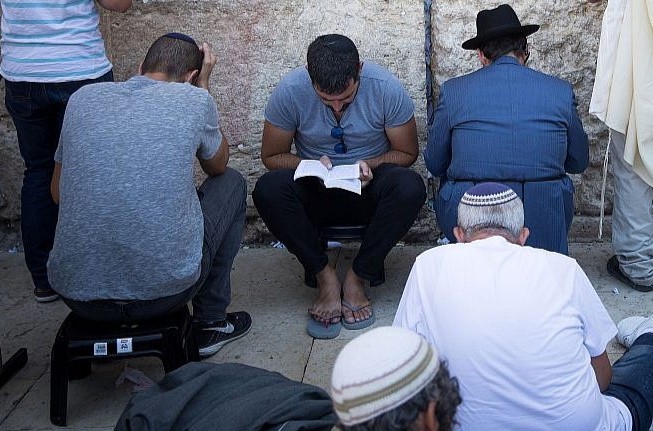
This Tisha b’Av, I was sitting on a low stool, following with the English translation the whirr of Hebrew around me read aloud by other congregants more fluent than I, as we made our way through a sequence of the Kinnot. These mournful elegies, written mostly by the rabbi/poet Eliazar HaKalir (most likely of Byzantium, 6th-7th century CE), are customary to be read on the day commemorating the destruction of the Temple and the subsequent calamities that befell the Jewish nation. One, in particular, caught my eye.
“Ei ko…?” [“Where is the ‘so’…?”] begins each stanza in Kinna 13, as in:
Where is the ‘so’, promised to our forefather Abraham at the Covenant in
‘So shall you always be [as numerous as the stars]’?
Behold now my homes swallowed up murderously.
Why, Lord, have you abandoned us for an eternity?
The ‘so’ passages HaKalir keeps quoting from the Bible are the turning points in Jewish history when G-d gave people Israel new directions to move forward. His words would start with “So…”
The timing is auspicious. What’s the ‘so’ now for the State of Israel, 75 years in and in the midst of a deep social rift?
Following closely the judicial reform protests, and I have friends and family on both sides of the divide, my take has been somewhat different. This is simply what the majority of the population wants. At this moment, it’s the direction I may not particularly like, but this is what the Israelis, through their democratically elected government, have decided is best for their country. They know infinitely better than I ever would what they need right now.
Amidst the turmoil, one moment that drew and kept my attention was when the night before the vote, the Jews on the opposite sides of the judicial reform gathered at the Western Wall to pray together for the peace and unity of Israel. Praying for a new ‘So…’
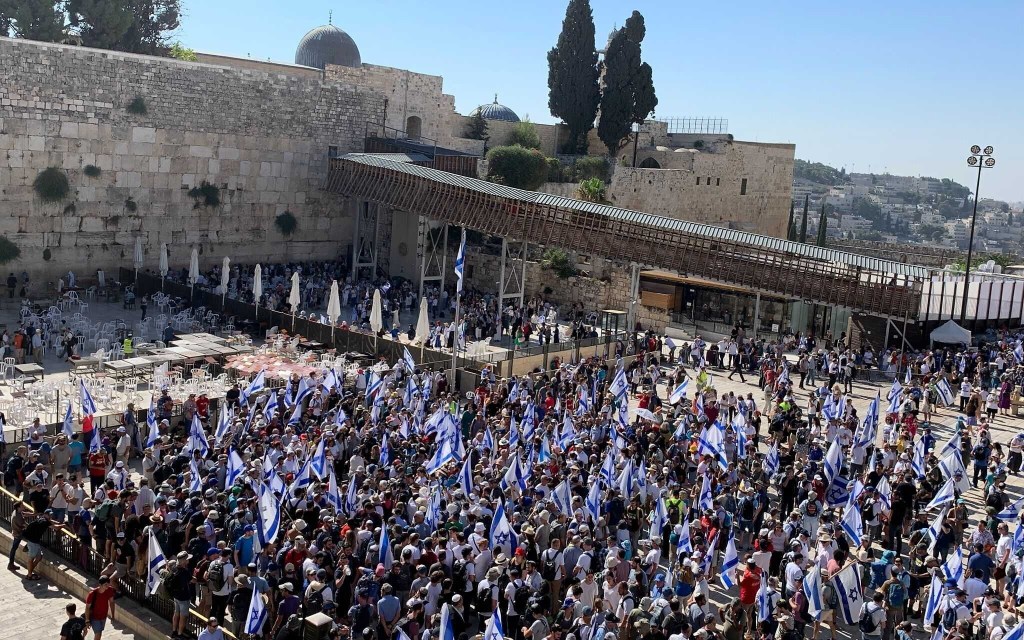
“Bringing peace between people” is one of the “things whose fruits we eat in this world, but whose full reward awaits us in the World to Come,” as recited daily in the morning prayers. It is my fervent wish that both sides of the divided Israel would continue to come together as they did that night at the Wall.
This joint prayer moved me. I wish we had healing moments like that here in the US too, during and after our divisive elections, of Jan. 6, of the traumatic decisions of our own independent judiciary. Seeking unity across the divide is one of the hardest and noblest things to do.
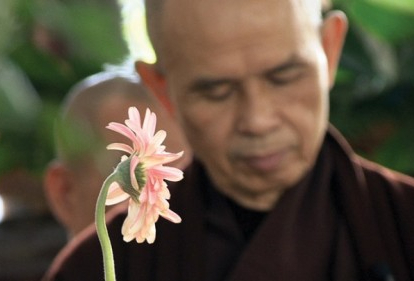
Thich Nhat Hahn, while still living in Vietnam, started a movement called Engaged Buddhism, which combined meditation and anti-war work. He worked tirelessly to put an end to war between North and South Vietnam.
He included seven traditional Buddhist practices of reconciliation, which guided his work, in his book Being Peace (pp. 77-81 of this online scan):
- Face-to-Face Sitting
- Remembrance (Each side remembers and recites the history of the conflict).
- Non-stubbornness (Doing your best to be willing to understand and reconcile).
- Covering Mud with Straw (Both sides say something to de-escalate tension).
- Voluntary Confession (Each side reveals their shortcomings).
- Decision by Consensus
- Accepting the Verdict
These are helpful strategies to find a solution, or at least, a move forward, in an intergroup or interpersonal conflict.
On a personal note, I had a busy July. I gave a talk on inclusive pedagogies in English composition courses at the World Congress of Applied Linguistics in Lyon. It went well, and I will be presenting on the same subject during the faculty training day at my college next month.

The conference was also an opportunity for my husband Jonathan and me to have our first vacation together, just the two of us, in 17 years. It felt so novel, refreshing, and very romantic. 🙂 (Here we are beneath Juliet’s balcony in Verona.)
A few months ago, we helped our adult daughter to move into her own place, not far from us, and start living independently, and she’s been doing well. Our younger daughter, a high school senior, works as a camp counselor this summer, which gave us some time to get away.
As a family, we find ourselves again in time of transition and adjustment. And here too I hope for that sense of “So…,” the sense of direction to move forward. May it come soon!
-Lane
 Lane Igoudin | Author, Professor, Dad